Interview · 7 min read
Pressure Is a Privilege
For one episode, Season 7 steps away from AI in every industry to ask a harder question: what actually gets someone from a district under-10 title to an Olympic medal, and what it costs along the way.
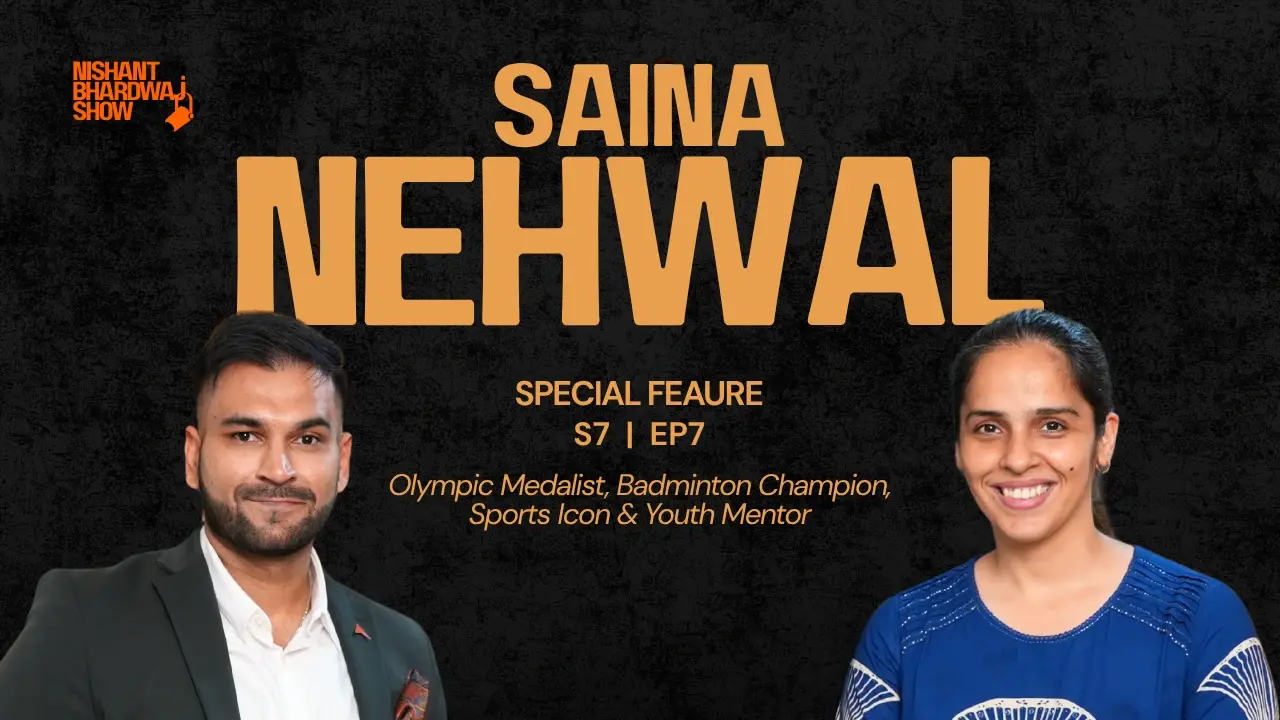
Nishant opens by naming the departure directly. The season has been built around AI in medicine, AI in manufacturing, AI in enterprise. Today, he says, “we are taking a step aside and we are going to discuss leadership,” with a guest who needs no introduction: Saina Nehwal.
The second innings
Asked what drives her now, years into retirement from competitive badminton, Saina’s answer starts with the same trait that built her career in the first place: wanting to be the best at whatever she does, applied to a new arena. She travels the country talking to young athletes, not to sell them on sport, but to be honest about what it actually demands. Cricket in India, she points out, is built with infrastructure and support most other sports simply do not have. For everyone else, and especially for the young women now winning at the highest level in other disciplines, someone needs to say plainly what the sacrifices look like before they commit to them.
Patience in an impatient world
The conversation’s first real thesis is about time. Saina started at nine, won her district under-10 title within two months, largely because she had grown up watching her own parents play, then a state title not long after. By twenty she was world number two. By twenty-five, world number one. Today, she says, facilities and coaching are far better than what she had, but patience has gotten scarcer: parents switch academies and coaches within months if results are not immediate, in a way her own mother, a housewife with no athletic career of her own, never did across years of uncertain progress. Saina got her first phone in 2006, by which point she was already winning at the elite level. The distraction did not arrive early enough to compete with the discipline.
“Comparison is the thief of joy.”
On social media she is unsentimental, pointing out that the version of anyone’s life visible in a reel is never the whole picture, good or bad. She is sympathetic to countries experimenting with age limits on social media access, and blunt about a related trend she is less comfortable with: the casual use of words like anxiety and depression for ordinary disappointment, as opposed to the real thing, which she believes deserves to be taken seriously and treated as such, including through therapy or mentorship, rather than diluted by overuse.
What it actually cost
The sacrifices Saina describes are specific rather than abstract. Her father, a scientist from a family of engineers and doctors, took out loans for rackets and tournament travel and woke at four each morning to drive her twenty-five kilometres to catch a bus. Her mother managed the household, her sister’s schooling, and Saina’s recovery all at once, massaging her aching legs and shoulders at night because the family could not afford a physiotherapist. Saina, for her part, did not learn how financially strained those years actually were until much later; her parents kept it from her on purpose. She gave up festivals, friends, and food she loved, and she is direct about why: she wanted her father to be known, in his own circles, as Saina Nehwal’s father. “Money is needed,” she says, “but money alone won’t keep you happy. Work keeps you happy.”
Three days before Rio
The centrepiece of the conversation is the story Saina tells about the 2016 Olympics. She arrived as the top-ranked player in the world, fresh off winning the Australian Open, carrying a bronze medal from the previous Games and a real chance at gold. Three days before her first match, with no fall and no clear injury, pain appeared in her knee. Rest made it worse. She could barely climb stairs. A cortisone injection was suggested to get her through the tournament; the pain only grew overnight. In five hundred career matches she had never once given a walkover, so she taped the knee as tightly as she could and played anyway, crying on court, focused entirely on the joint rather than the match. She does not remember who beat her. That night she told her father they were flying home immediately, choosing Mumbai over Hyderabad specifically to see a knee specialist faster. The MRI found a piece of extra bone growth that had broken inside the joint, bad luck with catastrophic timing, and surgery followed almost immediately.
The two months after were the hardest part, by her own account, worse in some ways than the injury itself: sleepless nights replaying matches she could not play, quiet, and a mother telling her simply not to worry, that she always found a way back. By the third month she was back on court. Over the following year she won the Malaysia Masters, a World Championship medal, reached the Denmark Open final, played the Indonesia Open, and took gold at the Commonwealth Games and a medal at the Asian Games. The missed Olympics still hurts, she says, because she was at her literal peak and beating players who had previously beaten her. But she points to Carolina Marín, who came back from four separate ACL surgeries to keep winning, as proof that the trait that actually separates elite athletes is not the absence of setbacks, it is what happens immediately after one.
Burnout is not the same as exhaustion
Asked directly about burnout, a word she hears constantly from people well outside sport, Saina draws a sharp line: burnout comes from forcing yourself through something you do not actually love, not from working hard at something you do. Her more provocative claim is about limits themselves. The moment you feel completely finished, she argues, you are very likely still only 45 percent of the way to what your body and mind can actually do, and you only find that out by testing the edge rather than assuming it. Fitness, in her account, is not separate from mental toughness, it is the mechanism that produces it: a body that is trained is a mind that stays focused under pressure. She recommends something as simple as ten unstimulated minutes a day, no phone, before the day’s stress takes over, and she is candid that she still finds this nearly impossible herself.
Confidence is repetition, not talent
Saina is unusually clear-eyed about her own limitations as a player: she was never in what she calls the naturally talented category, the players with instinctively beautiful strokes. What she had instead was a willingness to repeat a single shot until it stopped being a weak point, a process she describes as making the boring things easy through sheer repetition. She sees the same pattern at the very top of the sport today. Korea’s An Se-young, a reigning world number one, changes coaches roughly every four months, not from dissatisfaction, but because she assumes everyone chasing her is improving too and refuses to let comfort slow her down. At that level, Saina says, the gap between players is small enough that the deciding factor is rarely technique, it is whether a player is mentally strong enough to actually execute the shot she knows is correct when the point matters most.
Where AI fits, and where she hopes it never quite does
Asked, in a nod back to the season’s usual territory, what she makes of AI in her own sport, Saina’s answer is protective rather than dismissive. She is glad, in a sense, that AI cannot fully enter competitive badminton, because a sport reduced to pure optimisation risks becoming a video game rather than something worth watching. Where technology has already changed her sport for the better is wearables and analytics: heart rate, sleep quality, and shot-placement data that tell a coaching team exactly which strokes need work, a practice more advanced in Europe than in India but growing fast. She sees the clearest opportunity for founders not in replacing any part of a player’s training, but in supporting the full team now considered standard at the top twenty-five in the world: physio, strength trainer, psychologist, dietitian, sparring partners, the infrastructure that lets a player’s only job be training, recovery, and sleep.
The rapid-fire close
Winning or staying on top, which is harder? Winning, she says without hesitation, since the first breakthrough is the one that teaches you what staying there even requires. The loss she still turns over is the 2008 Beijing Olympics quarter-final, up 11-3 and already imagining a first Olympic medal, before her opponent’s coach reportedly told her during the break to pack her bags because she could not win, a piece of reverse psychology that worked; Saina lost 21-13 and sat with it for hours afterward. Asked for a win that mattered less than expected, she pushes back on the question itself: becoming the first Indian woman to reach several of her milestones changed her life completely, and badminton became the country’s second most followed sport partly because of it. On ambition now, she resists a fixed answer, open to politics eventually, still weighing coaching, mostly, in her words, going with the flow. Her message to the CEOs and founders in the audience is the same one that carried her through a broken knee three days before an Olympics: take care of your health first, because the mind performs better when the body is looked after, and then simply refuse to give up.
This piece draws on Season 7, Episode 7 of The Nishant Bhardwaj Show, a conversation between Nishant Bhardwaj and Saina Nehwal.
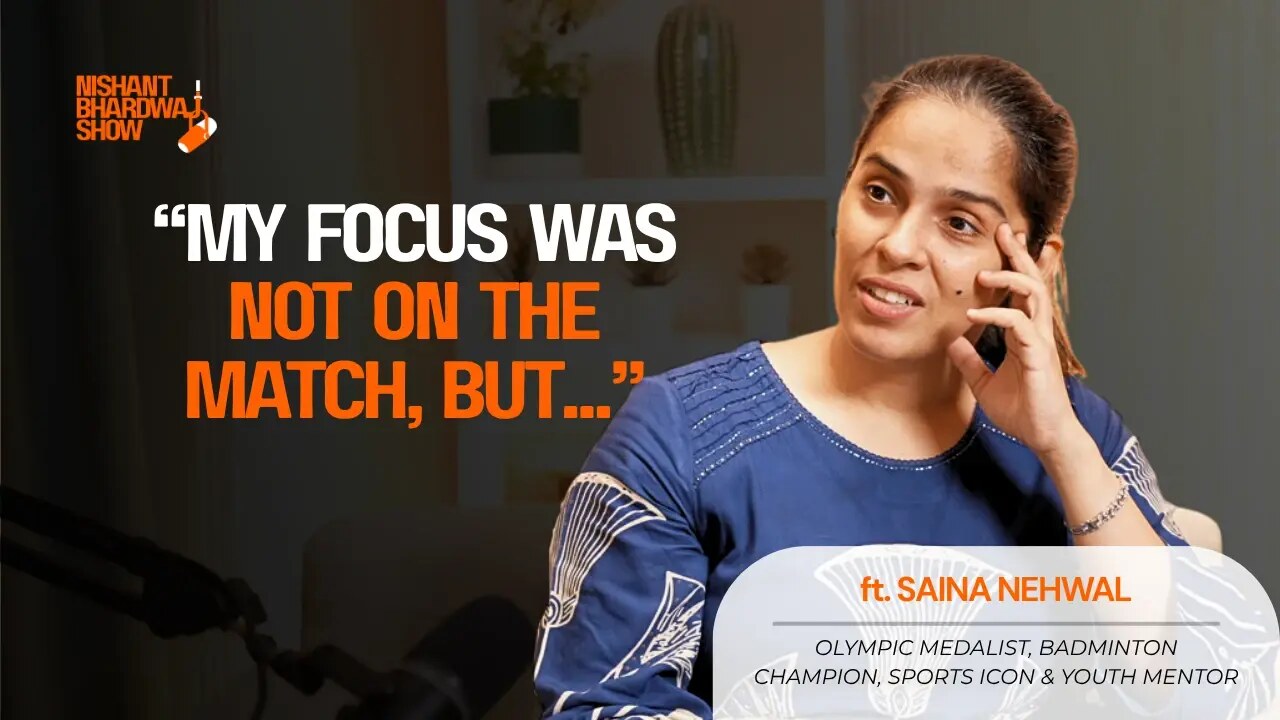
How to Become World No. 1: A Champion's 16-Year Climb | ft. Saina Nehwal | S7 Ep7
S07 · E07 · 1h 4m§ Keep reading
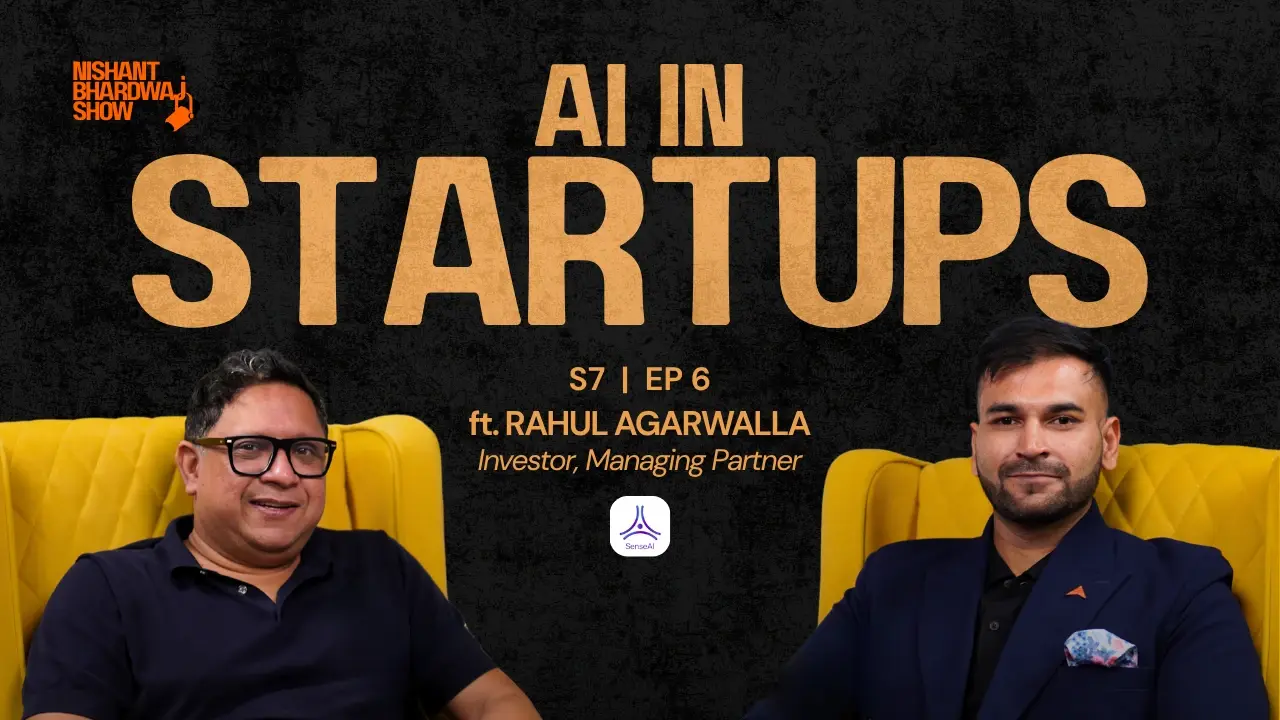
Is Every AI Startup Just a Wrapper?
Rahul Agarwalla of SenseAI Ventures on why proprietary data is the real AI moat, and why OpenAI and Anthropic will not build every application.
Rewritten: How AI Is Quietly Redrawing Every Industry
Drawing from over 200 conversations with the world's leading operators, scientists and executives, Rewritten is the field guide to the most consequential rewrite of our economy. Coming 2026 from a major publisher.
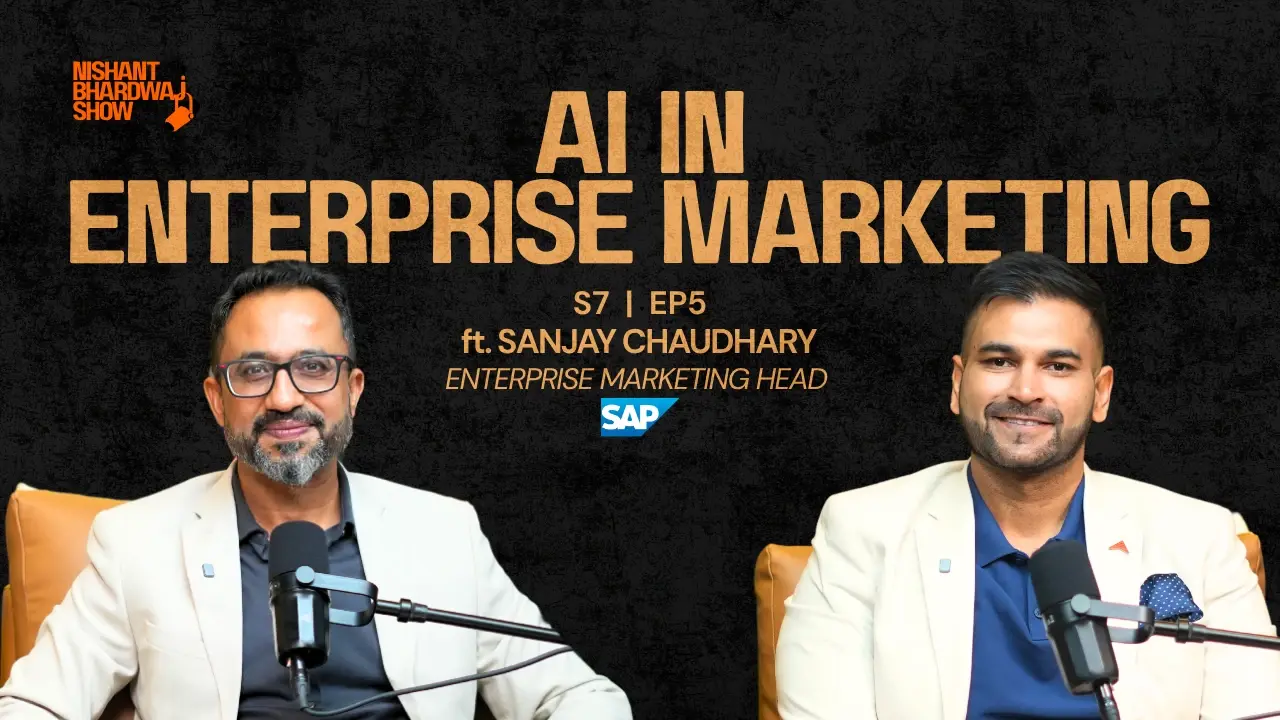
Is AI a Safe Medium for Enterprise Marketing?
Sanjay Chaudhary of SAP on why only 30 per cent of AI-search visibility is still inside your control, and why reputation has to come before revenue.