
Interview · 7 min read
Can AI Really Replace Marketers?
Karan Kumar, who headed marketing at Fabindia, ITC and DLF, and more recently at Hero Realty, makes the case that the job isn’t disappearing. It’s doubling. Season 7 of The Nishant Bhardwaj Show opens with the conversation on AI in marketing.
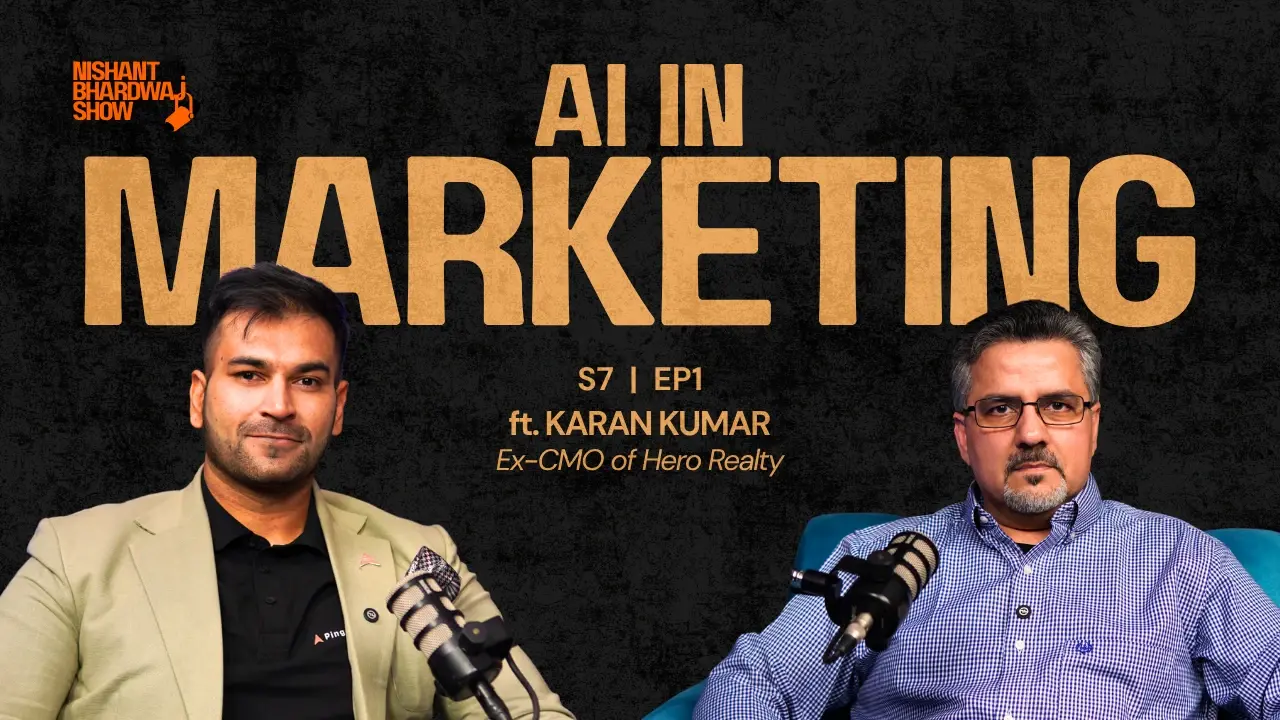
There is a version of the AI-and-marketing conversation that has, by mid-2026, become background noise: a panel repeats that “AI changes everything,” a brand posts about its new chatbot, everyone nods, nothing is actually decided. The opening episode of Season 7 of The Nishant Bhardwaj Show is interesting precisely because it refuses that version of the conversation, and it announces the refusal before a single introduction has been made.
Karan Kumar, who spent the last of his twenty-five years in marketing as Chief Marketing Officer at Hero Realty, DLF, and ITC, hands the whole hour its premise in one line: “AI itself is a samundar,” he says, Hindi for ocean. “Every conversation, every commerce transaction will happen through AI agents.” It’s a deliberately chosen image. An ocean is not a feature you adopt or a trend you wait out; it’s the medium everything now happens inside. That distinction, between AI as a tool marketers use and AI as the water marketers now swim in, turns out to be the organising idea of the entire conversation.
Nishant sharpens the stakes immediately: “Is it that earlier, as brand marketers, you were marketing only to your end consumers? Now you will also very consciously have to keep in mind how you’re reaching out to the algorithms.” It’s the question every CMO watching has almost certainly asked themselves at 2 a.m., and Karan’s answer is where the episode earns its keep. “Make the content you want to put out there in a language that the agents understand better,” he says, then immediately widens the frame: “Human beings traditionally have been sceptical of technology. We are more trusting of another human being. The more this world gets digitised, the more they will crave human connection.” Read quickly, that sounds like reassurance. Read carefully, it’s a thesis: the algorithmic layer and the human layer aren’t in competition, they’re now both mandatory, and most of the value in modern marketing sits in the seam between them.
“The more this world gets digitised, the more they will crave human connection.”
Twenty-five years, four categories, one throughline
When the interview proper begins, Nishant runs through the resume: Hero Realty, ITC, DLF, healthcare and fertility care along the way. Karan’s own summary is the version worth remembering: “I’ve done everything from Roti, Kapda, aur Makaan, and happy families. Roti starting with Aashirvaad at ITC, Kapda with Wills Lifestyle, John Players, and Fabindia. Makaan obviously with DLF and Hero Realty. And the happy families with ART Fertility Clinics.” Food, clothing, shelter, and family: four categories that share almost nothing except that all four are, ultimately, decisions people make with their gut as much as their head. That’s what makes him a useful voice for this particular question. He isn’t theorising about trust in the abstract; he built a career on it, category after category.
He traces it back to sixteen years at ITC across FMCG and lifestyle businesses, then Fabindia as its first Chief Marketing and Brand Officer, DLF as the first CMO for its residential business, and eventually Hero Realty. Alongside it, he’s spent recent years building an executive coaching practice, which he frames not as a pivot but as continuity: “When I look at what I do, I’ve always built people and institutions.” It’s a small line, but it quietly explains why the rest of the conversation keeps circling back to people rather than platforms, even when the subject is AI.
The job splits in two, not in half
The idea Karan returns to most often, and the one that gives the episode its real argument, is that AI is reshaping discovery without replacing the decision itself. “Agents can propose a hundred properties,” he says, “but you buy after you meet the people representing them.” It’s worth sitting with what that actually implies for a marketing department: the funnel now has two audiences instead of one, an algorithmic audience that has to be informed and a human audience that still has to be moved, and increasingly, both jobs live inside the same team.
That new discipline already has a name in his telling. “Earlier it was SEO, now we talk about AEO and GEO,” he says: answer engine optimisation and generative engine optimisation, the practice of making a brand legible to the systems now doing the recommending. “The attempt is to put content out there in a language agents understand and value better: the language of details backed by sources.” It’s a useful reminder that this isn’t a hypothetical shift for some future year. Season 7 is being recorded in a moment where that second audience, the algorithmic one, is already large enough to build an entire discipline around.
Nishant pushes on where that leaves the older tools of the trade: emotion, colour, story. Karan’s answer is the cleanest articulation of the episode’s whole worldview: colour and feeling remain squarely human territory, while discoverability to agents is a separate, newer skill layered on top of it, not a replacement for it. Marketing, in his telling, hasn’t been simplified by AI. It’s been made structurally more complex, and that complexity is exactly where the opportunity sits for whoever masters both halves first.
Working the tool rather than outsourcing to it
Asked about his own creative process, Karan describes something closer to collaboration than delegation, which lands as the most practical passage in the episode for anyone actually doing the work day to day. “I still write, then I give it to AI and say: what am I missing, what could I do differently, show me a perspective I’m not seeing.” He calls it a sparring partner: “I throw a punch, it throws one back, and I feel richer for the exchange.” It’s a small reframe with a large implication: the writer stays the author, and the AI’s job is only ever to widen the aperture.
He also names a tension worth carrying forward past this episode. “There’s a paradox,” he says. “More AI means more information, but also more scepticism. Is this AI-generated or authentic? That paradox is going to explode.” It’s the kind of line that will likely read as understatement within a year or two, and it sets up the deeper question he raises on originality: once a tool has learned a person’s voice well enough to write in it, how much of any opinion, surrounded by algorithmic feeds and echo chambers, was ever entirely one’s own in the first place.
The last word is about people, not platforms
Fittingly, the conversation closes on the coaching work Karan has built since stepping back from the CMO chair, and it’s the natural landing point for everything before it. Leaders, he says, are constantly asked to predict a future nobody can actually see clearly, and the sturdier posture is building the internal capacity to navigate uncertainty rather than performing certainty about it. “Human beings shape technology, not the other way around,” he says. “In two years, we won’t even be discussing AI. It’ll be omnipresent, like the calculator or Wi-Fi. We need to befriend it and have a healthy, symbiotic relationship.”
It’s a fitting place for Season 7 to begin. The episode opens with an ocean and closes with a calculator. The distance between those two images, from something vast and unmapped to something so integrated it disappears into the background, is more or less the argument the entire hour has been making.
This piece draws on Season 7, Episode 1 of The Nishant Bhardwaj Show, a conversation between Nishant Bhardwaj and Karan Kumar.
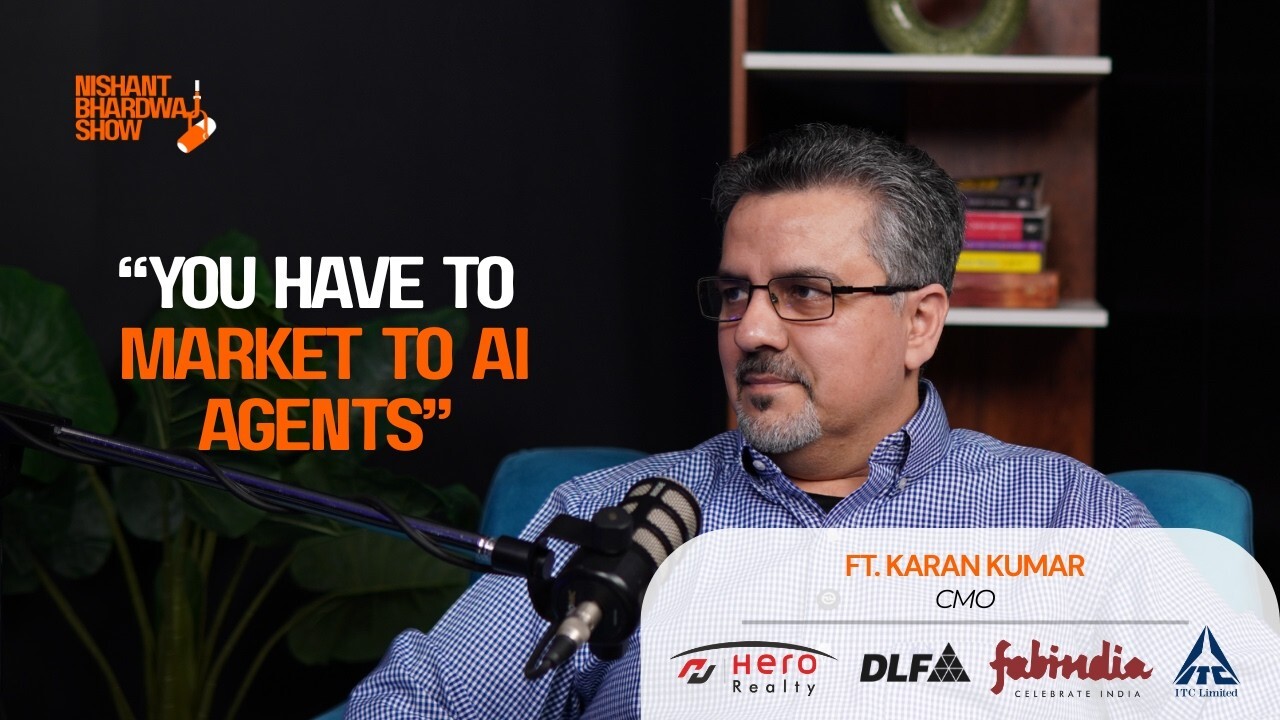
Can AI Really Replace Marketers? | ft. Karan Kumar (CMO) | S7 Ep1
S07 · E01 · 51m§ Keep reading
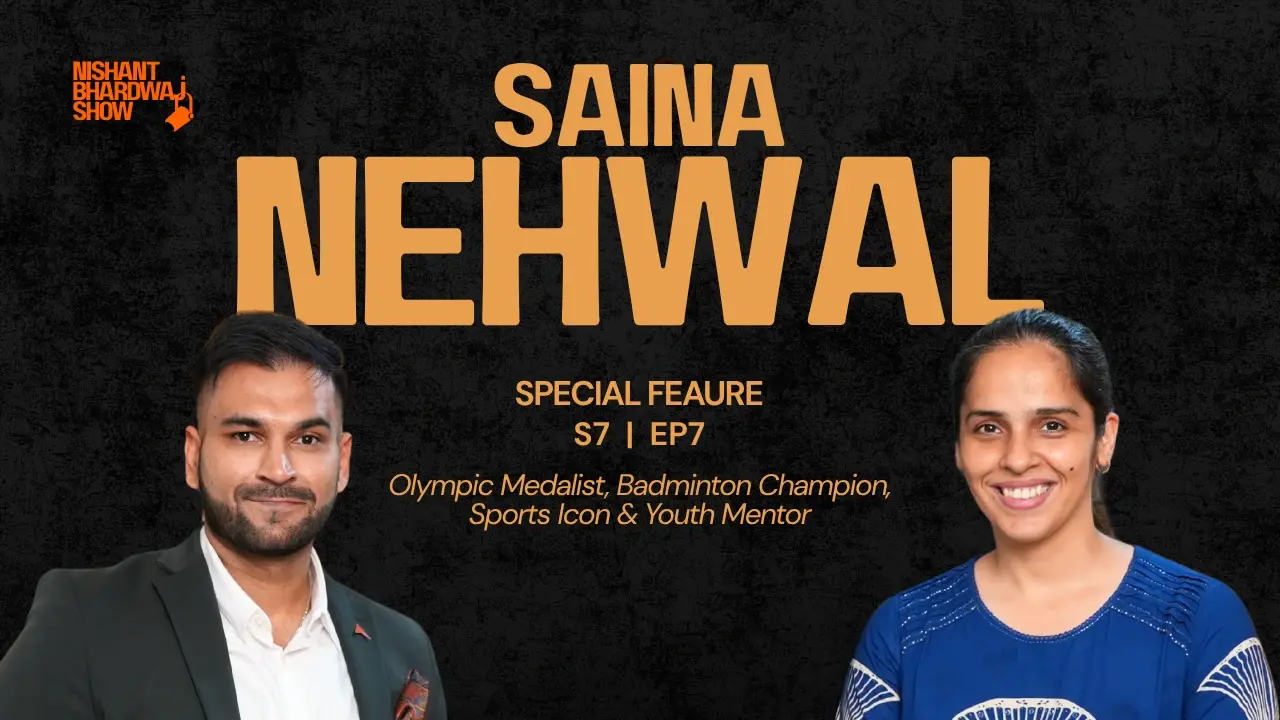
Pressure Is a Privilege
Saina Nehwal on the twenty-five years behind a world No. 1 ranking, the broken knee three days before Rio, and why burnout comes from the wrong work rather than hard work.
Rewritten: How AI Is Quietly Redrawing Every Industry
Drawing from over 200 conversations with the world's leading operators, scientists and executives, Rewritten is the field guide to the most consequential rewrite of our economy. Coming 2026 from a major publisher.
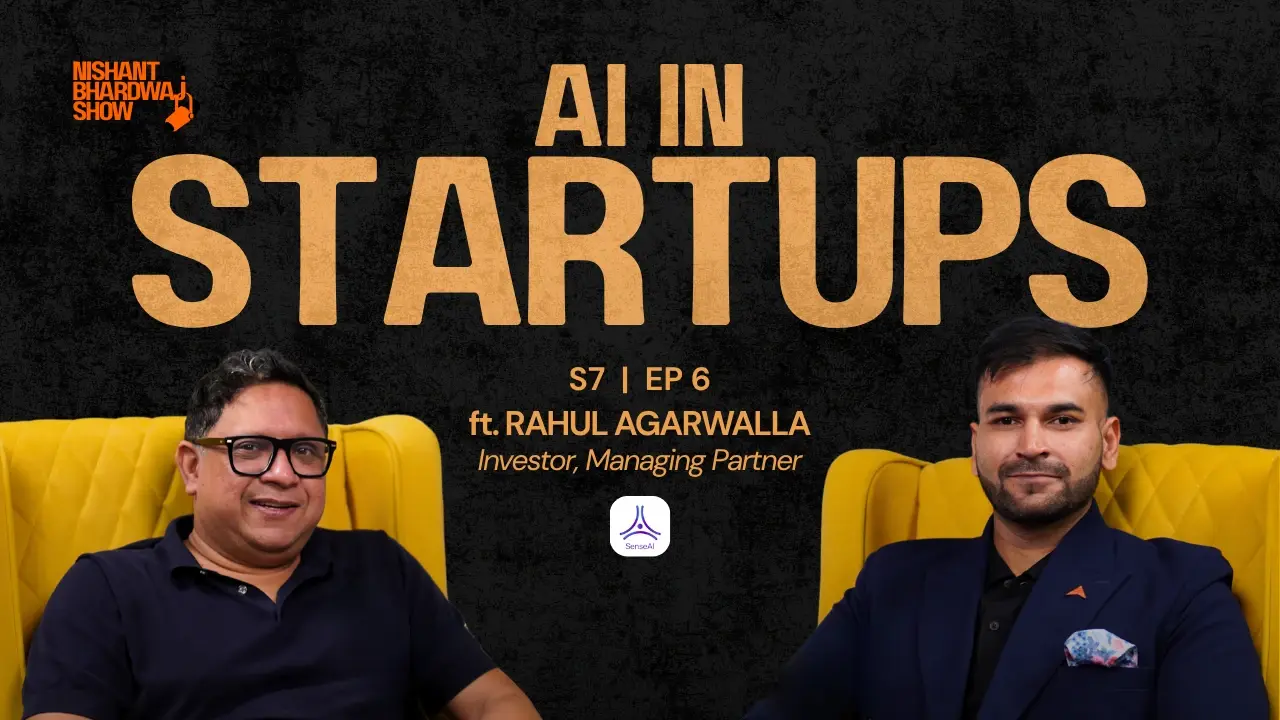
Is Every AI Startup Just a Wrapper?
Rahul Agarwalla of SenseAI Ventures on why proprietary data is the real AI moat, and why OpenAI and Anthropic will not build every application.