Interview · 7 min read
Can AI Fix Indian Manufacturing?
A third-generation industrialist who bets on founders over ideas makes the case that AI’s biggest win in manufacturing isn’t the robots. It’s the dashboard.
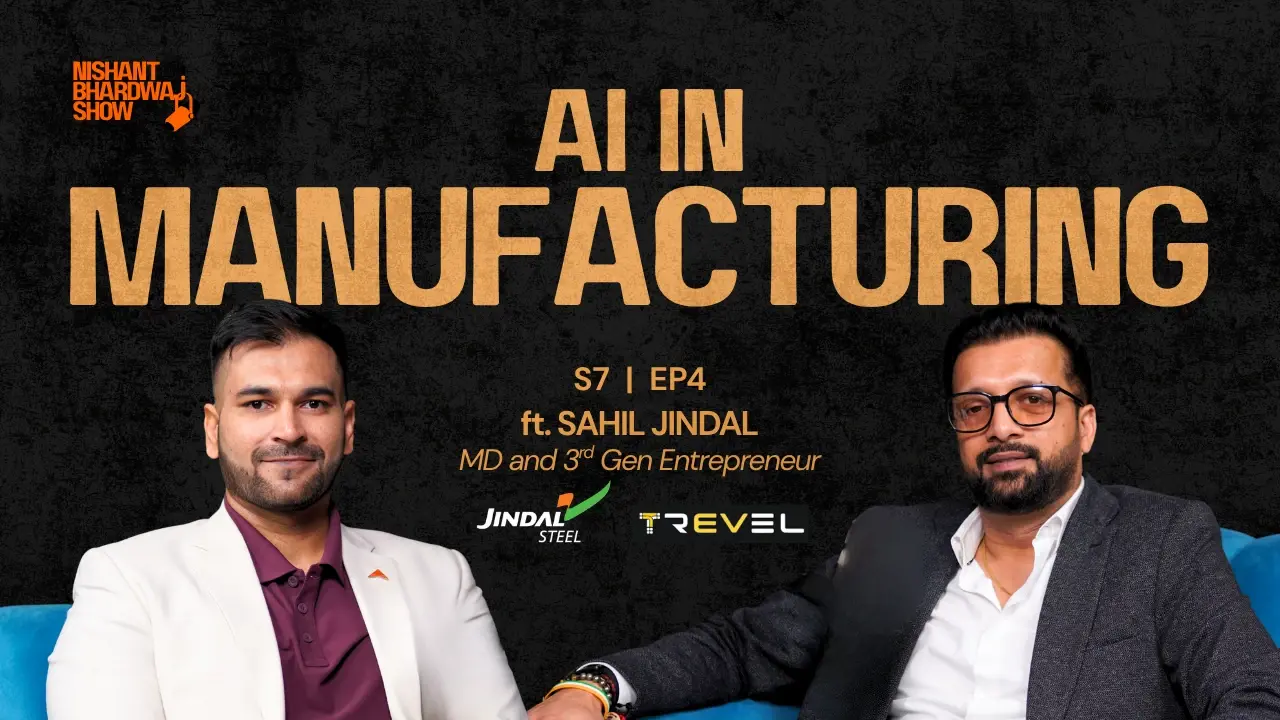
Nishant opens Episode 4 by welcoming Sahil Jindal, a veteran of the manufacturing industry building his own legacy, and laying out the ground the conversation will cover: AI in manufacturing, building businesses more than once, and what actually makes a startup fundable.
The weight of a name that isn’t fully his own
Before the conversation gets to AI, it lingers on the question hanging over Sahil’s career: what it means to inherit a name synonymous, in Indian business, with industrial scale. The Jindal surname carries outsized weight; the extended Hisar family that produced it split, over the decades, into several distinct empires: JSW Group, Jindal Steel & Power, and Jindal Stainless among them, all descended from Om Prakash Jindal’s branch. Sahil’s own branch runs a different, smaller river: the DS Jindal Group, founded by his grandfather Debi Sahai Jindal, who pivoted the family from farming into manufacturing around 1950. Today that group makes MLC and PVC pipes and GFRP rebar, and has diversified into cement, travel, and skincare.
That distinction, related family but different company, is exactly the kind of thing outsiders rarely bother to check, and it is part of what makes the pressure Sahil describes so specific. The public’s high expectations create a unique pressure, he says, one that new founders, who get to fail quietly, simply do not carry. A first-time founder’s flop is a footnote. A Jindal’s is a headline, whether or not the reader actually knows which Jindal group they are reading about.
Betting on the jockey, not the horse
Sahil spends an hour or two most days meeting with startup founders, roughly 80 per cent of them chasing investment, the other 20 per cent just wanting advice. His filter for both is the same: he backs the jockey over the horse, his term for choosing the founder over the idea. A great founder will iterate a mediocre business model into something workable; a great model in a poor founder’s hands rarely survives contact with the market. He treats the meetings less as a screening process than as an exchange, something he gets nearly as much out of as the entrepreneurs across the table.
What AI is actually doing on the factory floor
Where the conversation sharpens is on specifics. Sahil lists three uses of AI already live in his own operations rather than theoretical: compiling weeks of operational data down to hours, using tools like GPT to summarise long documents and pull out the one clause or number someone actually needs, and syncing demand with supply by running years of historical data to forecast trends more accurately than instinct alone. On the factory floor itself, he describes AI cutting middlemen out of the data flow from shop floor to dispatch, replaced by real-time dashboards that let him monitor production and shifts across multiple factories without being physically present in any of them.
He is candid about where India stands relative to competitors. In robotics, EV batteries, and manufacturing infrastructure, he puts the country roughly 30 years behind China, crediting the gap largely to the scale of state support Chinese manufacturers have received. He is equally clear that the gap is closing, pointing to new domestic policy and the arrival of anchor players like Apple and Samsung as evidence the trajectory has already turned.
The startups he will not back, and the model he is building instead
Sahil is unsparing about a pattern he sees often: founders who take a funding round and immediately upgrade their own lifestyle, salary and car, before the company has proven it can survive without them. His bigger critique is structural: founders trying to be a single-man army instead of building a team that can function without them in the room. It is the thinking behind the venture studio model he is building, which gives early-stage startups fractional access to CXO-level expertise they could not otherwise afford or justify hiring full-time.
His own newest venture, Trevel, a premium electric-vehicle cab service, started from a narrower observation: a gap in high-end airport transfers. He took the Co-founder and Chief Growth Officer title rather than CEO, by his own account simply because the project was the one that excited him most. He tells the story of joining a co-working space alongside Trevel’s Gen Z hires and being addressed by his first name for the first time in his professional life, an adjustment he describes as genuine culture shock coming out of a traditional family business.
Mindset, not technology, is the adoption barrier
Asked what is actually slowing AI adoption in traditional industries, Sahil does not point to cost or capability. He points to mindset, specifically among older leaders whose manual processes have worked for decades and see little reason to change them. The path in, he argues, is not a dramatic overhaul but small daily tools, AI features already sitting inside Gmail or a ChatGPT tab, that quietly build the comfort larger integration will eventually require.
On leadership more broadly, his list is short: transparency, ethics, and staying grounded. His advice against micromanagement is pointed: give a team the authority to make real decisions, including the authority to fail, because that is the only way genuine leadership on a team actually develops. He is equally direct about the structural mistakes he sees young founders make before they have even raised money: operating as sole proprietors, never registering a trademark, the unglamorous paperwork failures that cause real damage later. It is material enough that he is writing a book about it, titled Startup Saga: Idea to IPO.
Family, LinkedIn, and the rapid-fire close
Sahil’s newer investment arm, Siora Capital, is named after his daughters, and he is explicit about the intent behind that: teaching his own children how to invest and manage risk, not just inherit a balance sheet. He credits a more public habit, posting structured personal thoughts on LinkedIn, with growing his following from 20,000 to 55,000 in a year, and treats that following less as a vanity metric than as a working tool for finding mentors, co-founders, and hires.
The episode closes on a rapid-fire round that compresses most of his positions into single lines. He thinks India can genuinely rival China in manufacturing within thirty years. He does not believe AI replaces the workforce; it is a tool that still requires a human to run it. Asked about the specific weakness of a third-generation business leader, he does not hesitate: the pressure of expectations. Asked to choose between a great founder and a great business model, he always takes the founder. And on the current AI startup landscape, his read is blunt: most of what is being funded right now is a wrapper around someone else’s large language model, and the founders who will matter in five years are the ones building and training their own models rather than styling someone else’s.
His parting advice circles back to where the conversation started. Stay humble, commit fully to the specific problem you chose to solve, and do not leave anything half-heartedly. Coming from a third-generation industrialist still building a name of his own inside a much larger one, it reads less like a platitude than like the actual rule he has been following.
“Most of what is being funded right now is a wrapper around someone else’s large language model.”
This piece draws on Season 7, Episode 4 of The Nishant Bhardwaj Show, a conversation between Nishant Bhardwaj and Sahil Jindal.
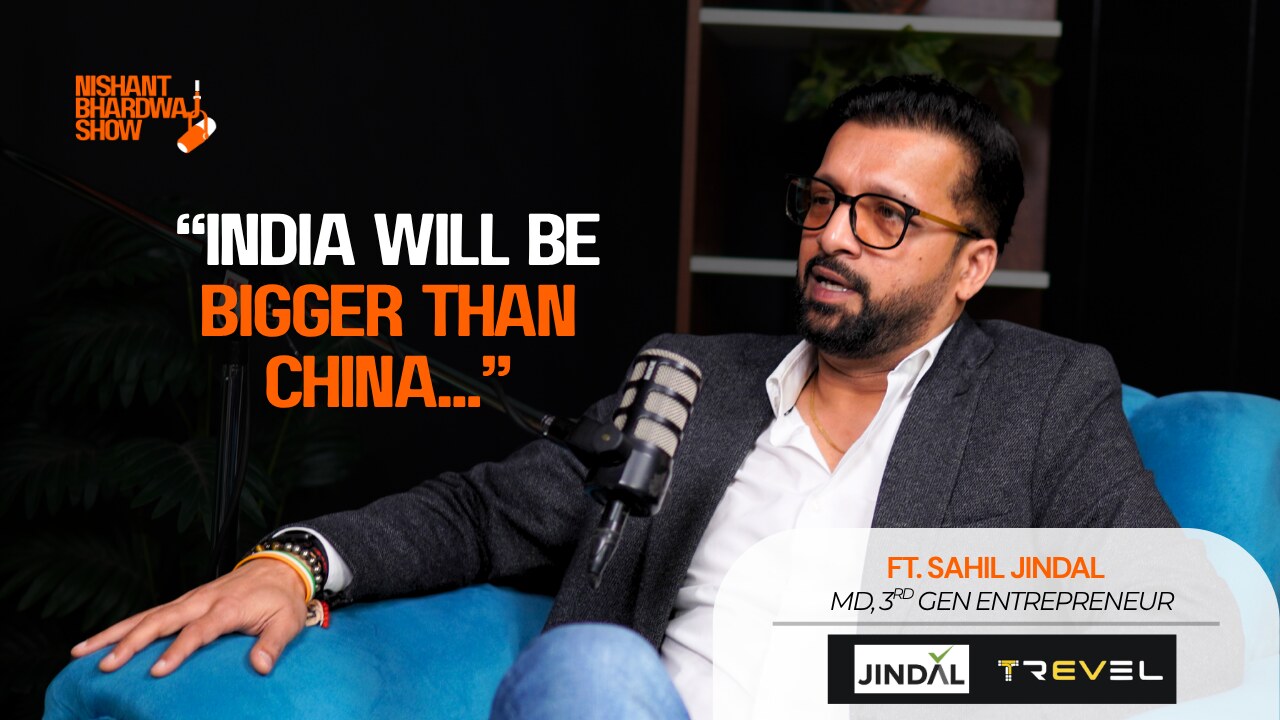
How AI Impacts the Indian Manufacturing Industry | ft. Sahil Jindal | S7 Ep4
S07 · E04 · 1h 5m§ Keep reading
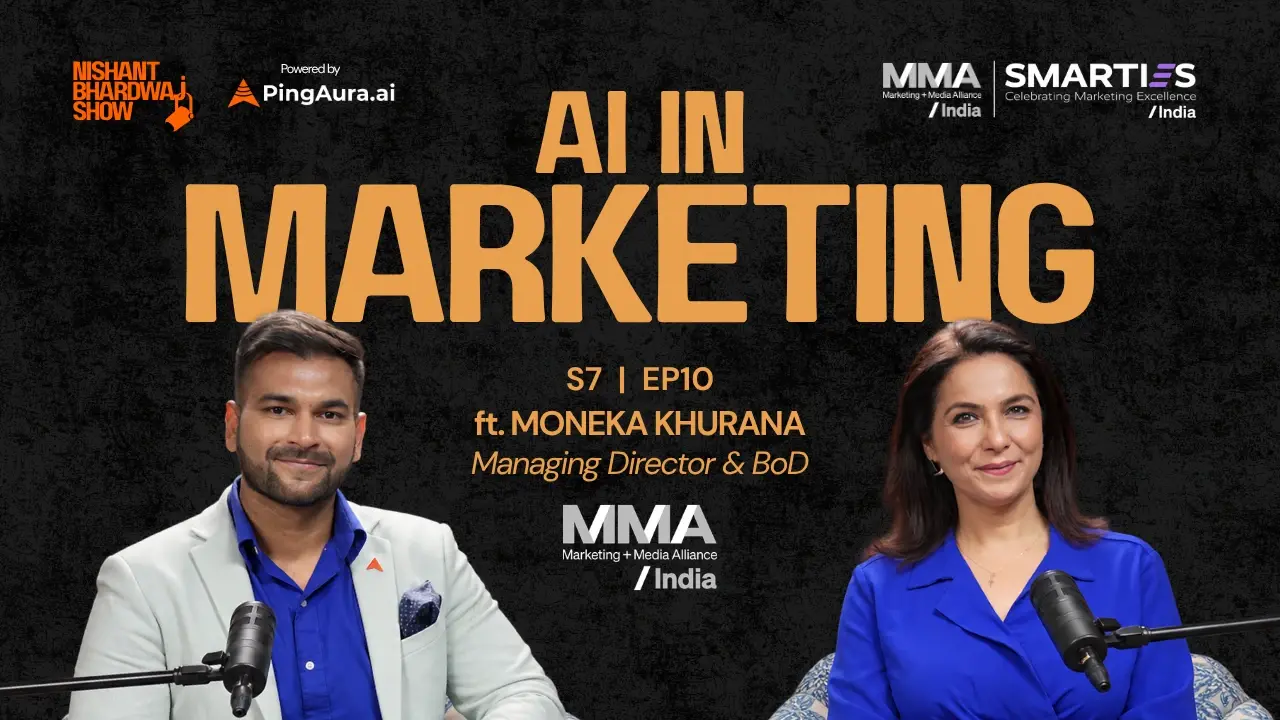
Communities: The Next Big Unlock for AI Marketing?
Moneka Khurana on AI fluency, brand visibility inside LLMs, human judgment, and the collective wisdom marketers need now.
Rewritten: How AI Is Quietly Redrawing Every Industry
Drawing from over 200 conversations with the world's leading operators, scientists and executives, Rewritten is the field guide to the most consequential rewrite of our economy. Coming 2026 from a major publisher.
AI Will Not Replace Humans. Humans Who Use AI Will.
A private equity investor turned operator across Zeta, PayPal, Amazon Pay and AWS makes the case that the real risk in a career was never taking one.